
Italian?
What does it mean to be Italian? Are the stereotypes true? Are Italian-Americans italian like me? Maybe more? A personal view on the notion of italianness.

I don’t usually write in english, Mosche is mostly in italian. I only do it when it makes sense, such as in this case. Are you Italian or Italian-Something? I would love to hear your thoughts: this could be a meaningful conversation, for the reasons I explain below. Native speakers, please forgive my stunt(ed) english: if I use AI I’ll never learn.
Traduzione in italiano con Google translate
I have always been fascinated by Italian-something (Americans, Australians, Argentinians or German: we come in many flavors), ever since I met them first in Australia at the age of 19. I’ve also always been intrigued by the way Italians are represented in movies or Tv, and I have a weak spot for Italian-American musicians. I’ve also looked into Italian-American studies, and followed the various Italian-American associations debating over the representation of Italian Americans in the media. Obviously my angle of observation is very different: I was born in the Old country, in a family with deep roots in Sicily who relocated to Rome in search of a better life. I grew up in a big city surrounded by immigrants from other regions, so my exposure to folk culture was limited. I remember some songs, some Feste Popolari and some bits of Sicilian folklore through my family, but no one sung me lullabies in dialect, I never took part in a folk event and growing up I spoke the modern version of roman slang, which was already no longer a real dialect. I remember being aware about local traditions in different places, but I mostly associated them to food and sweets, different for each occasion. I particularly looked forward to San Giuseppe, in march, because of the Fried Bignè filled with custard.
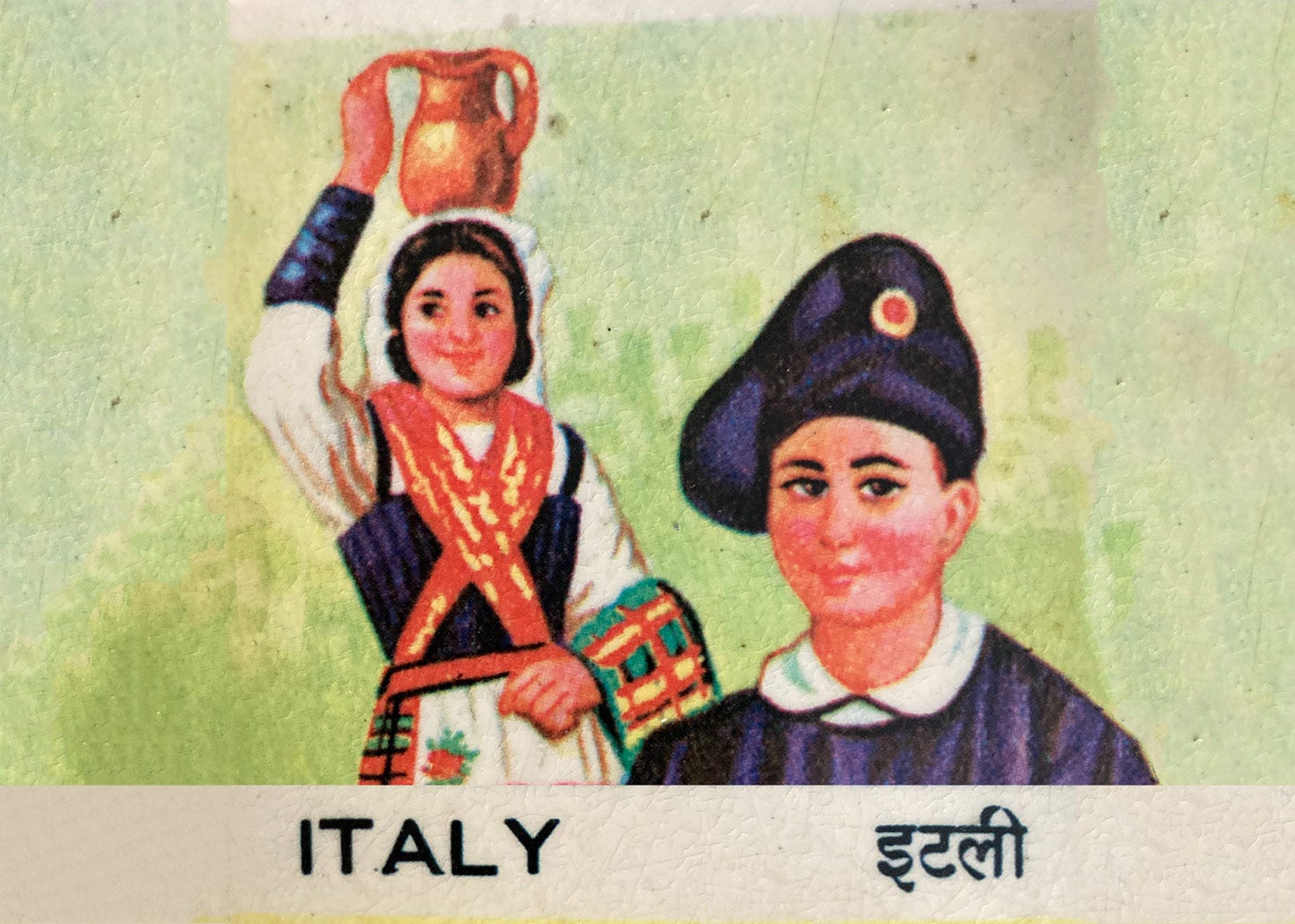
One of the captivating aspects of the whole Italian-something view of the world seen from Italy is the mythologization of the Old Country. Most Italian-Americans have a very precise yet somewhat imaginary notion of what Italy is, and what being Italian actually means. Partly comes for the Italian Pride, the predictable reaction to an environment crowded with other communities but slightly odd for us: national pride is not our favorite sport. We’re better at local pride (city, region, village, etc). Part of it comes from the second half of Italian-American: there is a whole imaginary Italy in American supermarkets, in the architecture of buildings or malls and in many cooking shows, so if you haven’t been to Italy you could be deceived. And finally some of it comes from a heartbreaking aspect of migration: you are forced to leave the place you were born in and love because there is no future there, but as soon as you arrive to your new home you start to miss the old one, remembering only the good, wholesome, better aspects and seldom the reasons that made you leave. This is probably why first gen immigrants (of all types and times) are generally more “conservative”. Case in point: when in 1979 I walked into an Italian-Australian bar in Sydney and identified myself as Italian, they looked baffled and made comments: “Italian men don’t wear earrings”. Certainly not in the ’40s when they left. I remember watching the first scene of the 1978 film Saturday Night Fever (Dinner with Tony Manero’s family) and thinking that it looked like the ’50s, not the present.
Unsurprisingly many second generation Italian-Americans are much more aware of traditions than me because they rediscover their italianness, cherish the old ways and wear the Tricolore with pride, like every other minority in the US. Not us (unless you’re a right wing extremist): we don’t reflect on our identity, don’t need to, we’re just Italians and that’s how we’ve been since forever. We’re generally conservative, especially when it comes to other cultures contaminating ours, for example in food or music. When Rock’n’roll became popular in the ’60s we had a huge controversy on whether Little Richard (or one of his many Italian imitators) could be considered a singer; still today the brand name for Italian music in the world is sadly Andrea Bocelli. There have been several attempts to introduce the healthier Tempura style frying in Italian recipes, none of which was successful. Photos of pineapple on pizza still cause discomfort among the general population. Only recently, because the right wing propaganda claims immigrants are polluting our culture, there is some kind of debate. But not on how interesting a really multicultural Italy would be, but on how to contain other cultures affirming the supremacy of ours.
Being a sound person I’ve always wondered about my sonic heritage, partly because of a conversation I’ve had years ago with an American guy who asked me what it was like to grow up in a country with “culture” (as opposed to the US, in his view): local music, food, traditions. I’ve been replying to that question in my mind for a long time, here’s what I came up with. I grew up with a single mother, a journalist and not exactly a natural born chef. She could make some dishes but she didn’t really like it (neither did my grandma), and unless there were guests we usually ate frozen, simple, fast cooking food, somewhat healthy but absolutely unsexy. Although she insisted I go to church and get my first communion, my home was not really a religious one, and I don’t remember anyone in my family praying or going to mass (with the exception of Easter mass, mandatory if you hoped to go to heaven). I was briefly exposed to Italian folklore in the late ’60s for political reasons: there was a brief left Folk revival in Italy too, and you could catch Rosa Balistreri (sublime Sicilian folksinger) live on television. But my most important early musical memories have nothing to do with Italy. The first sound I remember, the equivalent of a lullaby in my childhood, is Go Tell it on the Mountain sung by Mahalia Jackson, coming from my mother’s record player. This song put me in a state of bliss, it sounded like a benevolent aunt singing me good things, and the power of her voice was, and remains, reassuring and comforting. Most of my other early sonic memories are a blurred mix of Italian Pop music, until i found Little Richard and his version of Land of a Thousand Dances. I was seven and I could not imagine anything more exciting – I still don’t. Then came the Beach Boys, the Beatles and the rest of that decade’s music. But my imprint, the sound that evokes my childhood, the voice of my folklore is Mahalia.
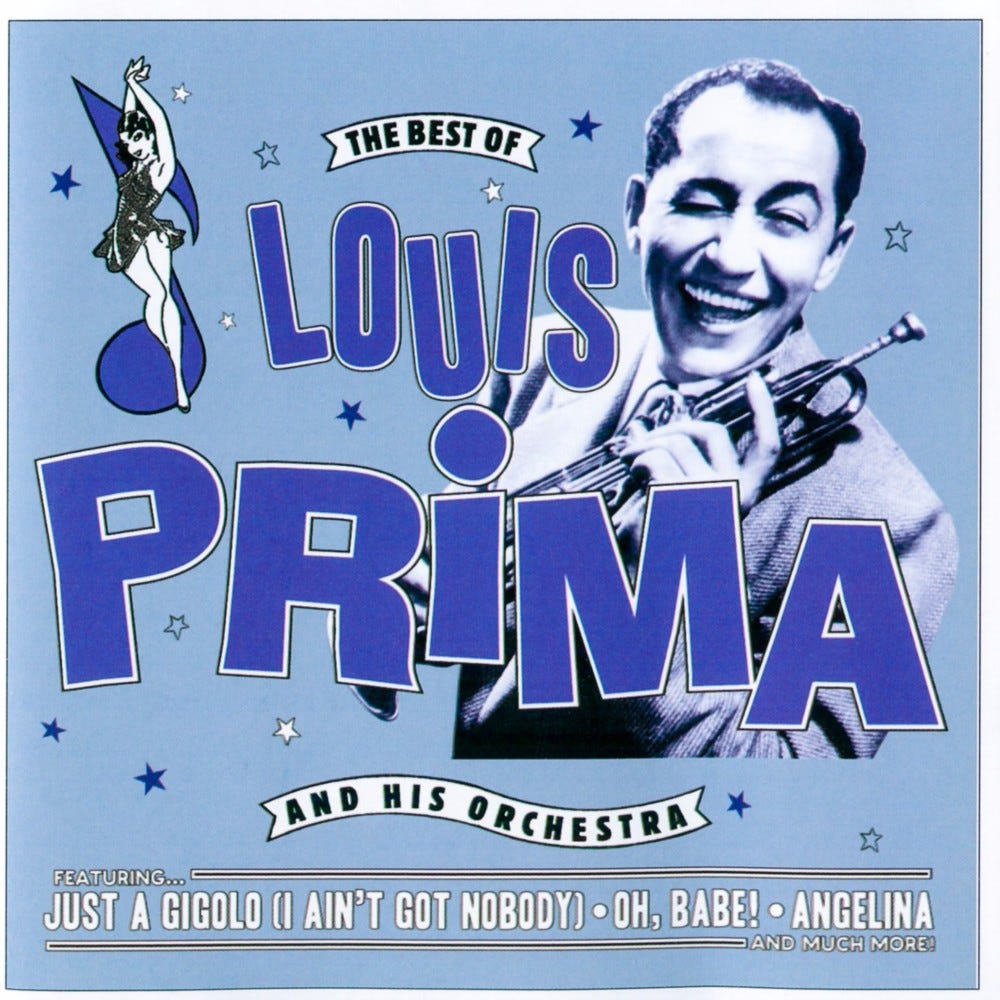
Does this make me less Italian? Probably yes: my grandfather grew up in tribal Sicily, his life was regulated by traditions and by the time he was seven (1893) he probably only knew folk songs, rhymes and proverbs. And maybe, if he had moved his family to America instead, he would have felt an obligation to transmit and preserve this heritage for his children and grandchildren. But my grandparents were no singers and I don’t remember anyone in my family from that generation listening to music. In fact one of the reasons I believe they moved to a big city far away was also to escape tradition, which is not just ancient popular wisdom and good food but also a cultural prison (the same is true for some of the Italians that moved to America or elsewhere). Moreover, in the past 80 years this country has evolved: many men wear earrings, some are queer, we eat fast food or Chinese, we make Techno and so on. Some of us are even more blasphemous: I, for example, drink percolated coffee and dislike espresso (particularly ristretto). But still, in the mind of many non Italians everywhere and in fiction (series, movies, etc.) we’re still supposed to be well dressed, jealous, romantic catholics who love to cook. I can’t count the times I’ve been asked to make pasta while being abroad, and sometimes I did just to prove a point: not all Italians can do it (I can, but my sauce is uninteresting). In fact if you knew me, you’d realize I don’t fit almost any of the Italian stereotypes: I dislike elaborate food, I don’t drink wine (except on some occasions), I play the Blues, long meals bore me to death, my lunch is often a PB sandwich (but I have this amazing sicilian PB that has ONE ingredient: peanuts). I come from a small family, I grew up surrounded by strong, independent working women and I have no children. I’m not religious, I’d rather listen to African traditional music and my favorite writer is William Burroughs. I’m not proud of Columbus, I think the Spanish are right: “His origins are debated” (from Wikipedia in Spanish). Moreover I loved the Sopranos: finally an Italian man that goes to the shrink (still pretty rare over here, mafiosi or otherwise) or hangs out in a queer bar (very uncommon 20 years ago). I didn’t mind the stereotypes: most of them were true, such as Paulie’s reaction to Starbucks, identical in the Sopranos and when it first opened in Milan, 20 years later.
Reading the Italian-American literature (or watching the movies) and meeting many second and third generation is often very interesting and always food for thought for a number of reasons, last but not least that, due to the several waves of immigration into Italy since the late 70s, our society is facing many of the same issues that American society has had to deal with in the past (with major differences, the biggest being we’re not a country that was founded by immigrants). Unfortunately we don’t seem to remember when we were migrants ourselves (and have been subjected to horrible racism in Europe and elsewhere), so we’re making the same mistakes. For me this is a very interesting cultural node, and some questions keep returning: who is the real Italian in 2026? What does it mean to be Italian? Could it be that a nation’s identity can only be defined from the outside? If so, shouldn’t we Italians have a closer relationship with our cousins all over the globe? And what does all this means for the identity of New Italians, people from Africa, India or the Philippines who migrate to Italy today?
You wonderfully illustrate the complexity of what it means to be Italian, Sergio, as well as how it evolves. I really enjoyed the thought-provoking read. Your example of the Australian Italian who said in the 1970s that Italians don’t wear earrings … and your observation that they didn’t in the 1940s, when they left. Perfect.
I don’t think there can be a strict definition of what being an Italian is. But we can clearly say what it is NOT. You talked about your joy in meeting Italian-Americans, German-Italians, etc. Well, I’m an Almost-Italian. Not a drop of Italian blood (I’m American and Dominican by birth) but living in Rome for more than 25 years, the last few of them in a very Italian neighborhood (Quartiere San Paolo). I’ll never be fully Italian (I have written about this topic in my newsletter; look for a post called “Almost Roman”). But I’m
a serious student of the culture and I bristle at those who think they understand this complex reality because they say “Ciao Bello!”, won’t touch a cappuccino after 11, once toured the city on a rented Vespa, and their profile photo is them in front of the Colosseum.
Il fatto è che l'identità e l'estetica italiana cominciano ad esistere (con fallacie e lacune a manetta) solo a partire dalla seconda metà del Novecento.
Lo dice perfino il nostro inno nazionale, nella parte che non si canta: "Noi siamo nei secoli calpesti e derisi, perché non siam popolo, perché siam divisi".
Tecnicamente ci uniamo nel 1861, ma è una pura formalità: un abitante di Treviso all'epoca non era in grado di capire cosa diceva un abitante di Enna (che tra l'altro all'epoca si chiamava ancora Castrogiovanni), ma neppure uno di Cuneo. Parlavano letteralmente lingue/dialetti diversissimi. Vestivano in modo diverso, mangiavano cose diverse, avevano stili di vita molto diversi.
Insomma, quando Metternich dice "L'Italia non è che un'espressione geografica" non sbaglia.
Lo siamo stati fino all'altro giorno. Uno storico come Silvio Lanaro dice che la prima forma di unità culturale degli italiani arriva con il 1956 e la televisione (che non diventò di massa per anni e che comunque come prima cosa si impegnò a insegnare l'Italiano a tutti, col maestro Manzi). Prima, l'Italiano era una seconda lingua (assolutamente facoltativa) per tutti. La prima era il dialetto, tra l'altro spesso quello locale e non quello regionale (che era una seconda prima lingua).
L'immaginario che il mondo ha degli italiani (e che spesso hanno perfino gli italo-something in giro per il Pianeta) è figlio ancora di quella divisione regionale/locale che non lasciava spazio a nulla, sul piano culturale, che davvero "facesse gli italiani".
E cambia a seconda dei luoghi di migrazione. Dove i migranti italiani sono in prevalenza del Sud, l'immagine dell'italiano è quella del picciotto scuro scuro, tutto famiglia, cibo, gelosia.
Dove l'immigrazione è stata piemontese (penso all'Argentina), l'Italiano ha tratti completamente diversi (e opposti agli immigrati di origine spagnola): chiari, grandi lavoratori, schivi, un po' tristi (triste come doveva sembrare una persona nata a Benvagienna - CN nel 1911 a uno spagnolo in Argentina). E così via.
A questa visione (che, per dire, fino agli anni Novanta ci portavamo dietro: penso a Joey in Friends, con 7 sorelle tutte vestite di nero, gelosissimo, con un'ossessione per il cibo e la figa oltre il limite del ragionevole, ignorante ma di buon cuore, ecc.) si è aggiunto l'immaginario che l'Italia post-unitaria ha dato di sé attraverso il Cinema (tutto il racconto della dolce vita, delle "vacanze romane", ecc.), poi attraverso la moda (uno dei pochi export non-food; ecco perché ci pensano eleganti).
Ma, per quanto constato, gli italiani immaginati da chi non è italiano (o interpretati da chi è italo-something) continuano più o meno a essere quelli, almeno sui media (ma pure nel privato, devo dire).
Per il resto, mi è capitato di leggere la Lonely Planet dell'Italia ed è stata una lettura interessantissima. Perfino la guida più cosmopolita, più schierata contro le banalizzazioni culturali, ecc. racconta l'Italia con toni che ricordano gli americani in La pelle di Malaparte (che è il libro più spietato sull'identità italiana e tuttora una lettura fondamentale).
Perfino Dan Brown, uno che pur scrivendo romanzacci fa tantissima ricerca sul tema che tratta, nel suo "Inferno", ambientato a Firenze, non riesce a sfuggire dal trappolone degli italiani ossessionati dal cibo e dagli "spaghetti bolognese" (va letto in inglese: i traduttori italiani hanno limato tutte le banalizzazioni culturali; si sono arresi però di fronte al fatto che il mistero su cui si regge tutto il romanzo non è tale per chiunque parli italiano).
Siamo un po' quello. Poi capita che dal vivo ci confondano: io che sono piemontesissimo ma scuro-olivastro (figlio di Annibale: nel paese dei miei nonni c'è la torre moresca) vengo scambiato per spagnolo, greco, libanese dagli americani. La mia compagna (veronese, mora, ma coi tratti nordeuropei) viene scambiata per svedese, slovena, tedesca (d'altronde viene da una zona di influenza cimbra).
Aggiungiamo al mix il fatto che, per questioni di organizzazione dei produttori di fast fashion, ci vestiamo *uguale* agli spagnoli (stesse catene) e boh, nessuno ci distingue più.
Forse è un bene. Da italiano che non ha buona parte dei tratti che gli immaginari ascrivono all'italianità (sono ateo, figlio unico, con famiglia irregolare, di sinistra, non romantico, vestito in modo non eloquente, quasi astemio, totalmente avulso dalle tradizioni regionali, ecc.), confesso che non mi dispiacerebbe un bel giorno dire "sono europeo", senza troppi pregiudizi (positivi o negativi che siano) culturali e identitari.
Già adesso, come buona parte degli italiani, sono più a mio agio a dire "sono torinese" (pur avendo 3 nonni su 4 che sono nati tutti altrove, spesso in altre regioni, ma non figli dell'immigrazione anni Sessanta-Settanta), perché mi identifico più nella sobrietà sabauda e nel suo storico underground (da cui fieramente provengo) che nel libro Cuore e nel tricolore.